Neuroanatomy-informed neuroimaging
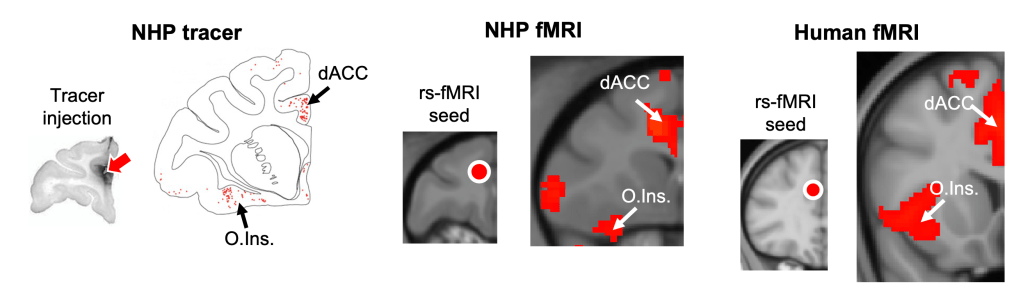
The brain is an exquisitely interconnected system, with each region presenting specific connectivity distributions. Neuroimaging methods are great tools to map brain connectivity in humans in vivo. However, the precise description of anatomical circuits underlying behaviors still relies on the golden-standard method of neuroanatomical tract-tracers. I am interested in using this methodology to guide multimodal imaging analyses in humans and nonhuman primates.
Relevant publications:
1. Jezzini et al. (2021). A prefrontal network integrates preferences for advance information about uncertain rewards and punishments. Neuron.
2. Trambaiolli* and Peng* et al. (2022). Anatomical and functional connectivity support the existence of a salience network node within the caudal ventrolateral prefrontal cortex. eLife.
Neurocircuitry-based biomarkers
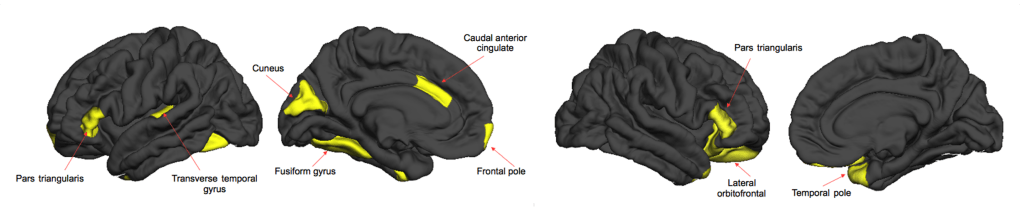
Machine learning allows for data-driven interpretations of complex and extensive datasets from modern neuroimaging methods. It supports the description of circuits and patterns associated with specific behaviors or disorders. I am interested in combining such techniques with multimodal neuroimaging methods to explore and identify potential biomarkers in neurological and psychiatric disorders.
Relevant publications:
1. Trambaiolli et al. (2017). Feature selection before EEG classification supports the diagnosis of Alzheimer’s disease. Clin. Neurophysiol.
2. Trambaiolli et al. (2017). The relevance of feature selection methods to the classification of obsessive-compulsive disorder based on volumetric measures. J. Affect. Disord.
3. Trambaiolli et al. (2020) Resting-state global EEG connectivity predicts depression and anxiety severity. Int. Conf. IEEE Eng. Med. Biol. Soc.
Neurocircuitry-based neurofeedback
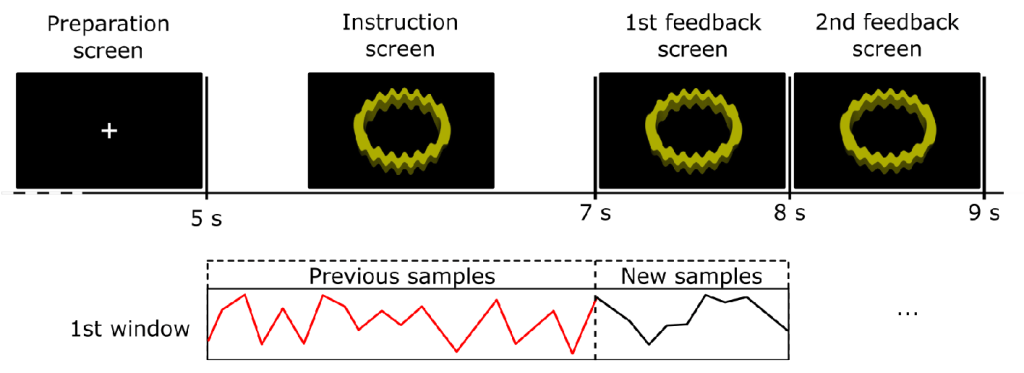
Neurofeedback is a promising methodology that aims to train participants to self-regulate imbalances in their neural circuitry. Neurofeedback protocols may target circuits involved in emotion and cognitive processing. I am interested in providing neuroanatomical inputs to optimize neurofeedback trials for affective disorders and dementia.
Relevant publications:
1. Trambaiolli et al. (2018). fNIRS-based affective neurofeedback: feedback effect, illiteracy phenomena, and whole-connectivity profiles. Neurophotonics.
2. Trambaiolli et al. (2021). Neurofeedback training in major depressive disorder: a systematic review of clinical efficacy, study quality and reporting practices. Neurosci. Biobehav. Rev.
3. Trambaiolli et al. (2021). Neurofeedback and the aging brain: a systematic review of protocols for the treatment of dementia and cognitive impairment. Front. Aging Neurosci.
 Lucas R. Trambaiolli, Ph.D.